
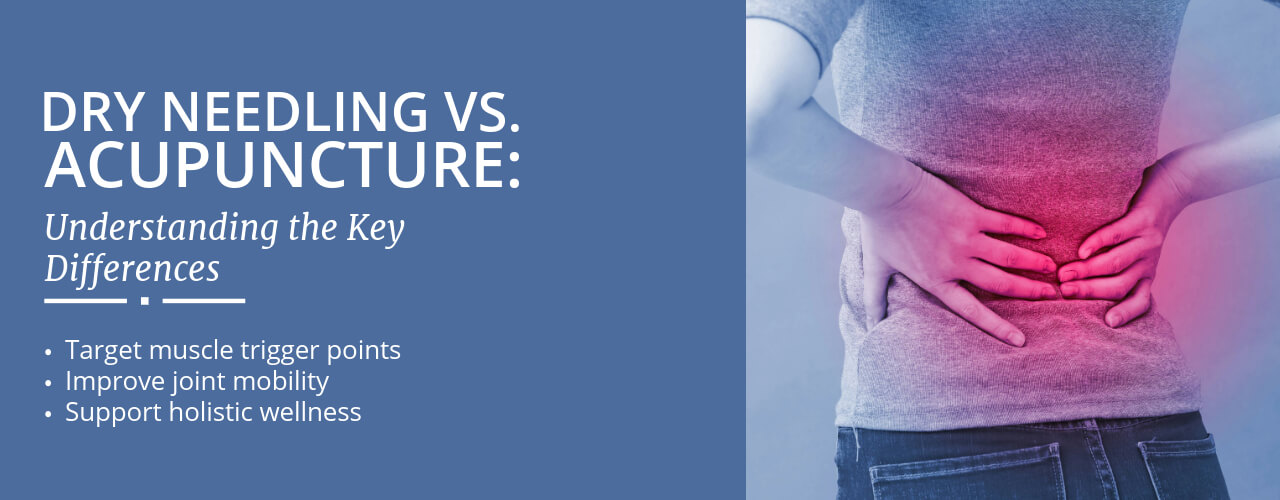




Many patients ask about the difference between dry needling and acupuncture, especially when exploring treatment options for pain relief and muscle tension. While both techniques involve inserting thin needles into the body, their purpose, method, and underlying philosophy vary greatly. This blog explores dry needling vs. acupuncture to help clarify what makes each treatment distinct and how they may play a role in your recovery process.
Physical therapists often incorporate dry needling into treatment plans to reduce muscle tightness, improve movement, and promote healing. Acupuncture, by contrast, has roots in traditional Chinese medicine and focuses on restoring energy flow throughout the body. At Complete Game Physical Therapy, we offer dry needling, but not acupuncture.
How Do the Techniques Compare?
At first glance, dry needling and acupuncture may appear similar. Both use sterile, hair-thin needles. However, the reason for inserting the needle and the targeted points differ between the two techniques.
Dry Needling
Purpose
- Targets myofascial trigger points or taut bands of muscle tissue contributing to pain and dysfunction.
Training
- Performed by licensed physical therapists trained in musculoskeletal assessment.
Focus
- Relieves tight muscles, improves joint movement, and supports rehabilitation goals.
Acupuncture
Purpose
- Based on traditional Chinese medicine, acupuncture targets specific meridians or energy pathways.
Training
- Performed by licensed acupuncturists who study Chinese medical theory and diagnostic systems.
Focus
- Aims to restore balance and promote overall wellness.
Comparing the Benefits of Dry Needling vs. Acupuncture
Patients often ask which is more effective: dry needling vs. acupuncture. While acupuncture does have some key benefits, including pain relief, dry needling is generally a better choice for people dealing with musculoskeletal pain. Dry needling can:
- Reduce muscle tension and improve tissue health
- Help restore joint range of motion
- Support faster recovery from injury
- Complement strengthening and mobility exercises
- Work well as part of a larger rehabilitation plan
Physical therapists use dry needling to target specific muscles contributing to movement dysfunction or pain. Although dry needling is not a standalone solution, it can be a powerful tool when combined with manual therapy, therapeutic exercises, and movement retraining.
Comparing the Experience of Dry Needling and Acupuncture
Another key distinction in dry needling vs. acupuncture is how the session is structured and what sensations patients may feel.
In dry needling, the therapist inserts the needle directly into a muscle trigger point. This may create a twitch response, followed by a deep ache or muscle release. Most sessions last 15 to 30 minutes and are usually integrated into a broader therapy session that includes stretching or exercise.
In acupuncture, the practitioner places needles along meridian points believed to regulate energy flow. The needles are often left in place for 20 to 40 minutes while the patient relaxes.
Discover the Benefits of Dry Needling at Complete Game Physical Therapy
If your goal is to improve movement, decrease muscle tightness, and return to physical activity, dry needling provided by one of our physical therapists may be a good solution for your needs! It is highly targeted, based on anatomical structure, and supported by a full-body rehabilitation plan.
However, choosing between dry needling vs. acupuncture does not need to be confusing. At Complete Game Physical Therapy, our physical therapists provide clear education, thoughtful assessments, and treatments designed to support your goals. If dry needling is part of your plan, we will ensure it is applied safely and effectively as one piece of your overall recovery strategy.
Contact us today to schedule your personalized assessment and learn how targeted care can help you move better, feel stronger, and return to the activities you enjoy.